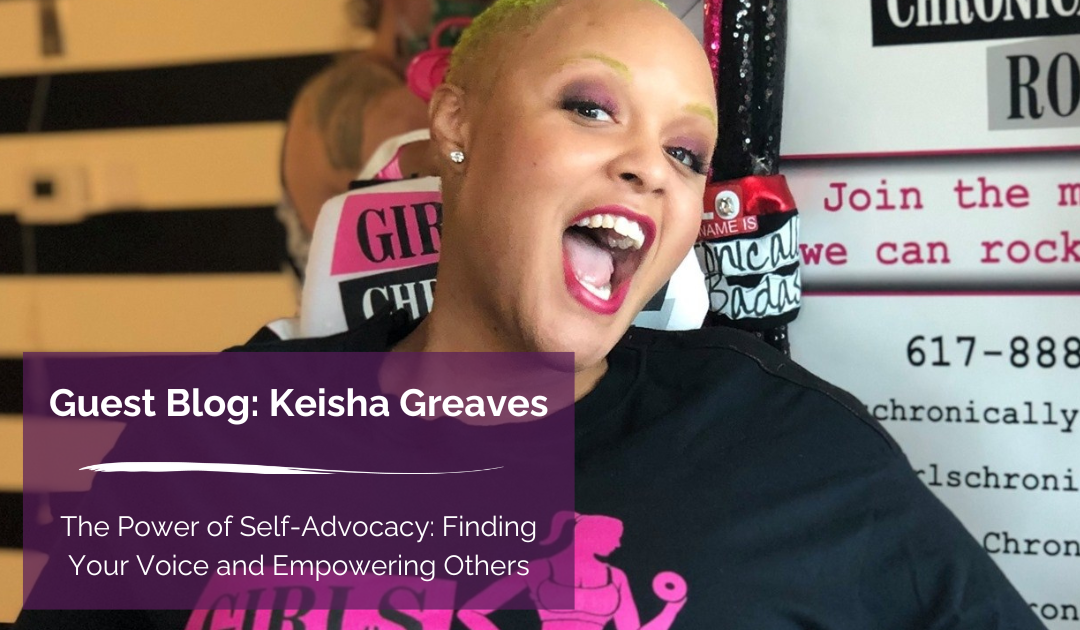
Keisha Greaves is the founder of Girls Chronically Rock, an adaptive fashion consultant, and a self-advocate. In a new blog series, Keisha will share her story, as well as her perspective on key issues for the disability community. In this entry, Keisha shares her journey with self-advocacy. This is part one of a two-part blog.
Today, I want to dive into a topic that’s very close to my heart: self-advocacy. It’s a concept that has not only shaped my personal journey but also continues to empower me to push for change in my life and the world around me. If you’ve ever faced a challenge—whether physical, emotional, or systemic—you might have encountered the idea of standing up for yourself. But advocating for yourself can often feel like an uphill battle, especially when you’re up against big systems or deeply ingrained biases. So, how does one get started on the journey of self-advocacy? How can we make it easier for others to advocate for themselves? And, as allies, what can we do to help amplify the voices of those who need support?
Let’s break it down.
My Journey with Self-Advocacy
If you’ve been following my story for a while, you know that my diagnosis of limb-girdle muscular dystrophy (LGMD) came when I was in my twenties, a time when I was just beginning to find my confidence and voice in the world. Before my diagnosis, I was a young woman full of dreams—dreams of pursuing a career in fashion, traveling the world, and building a life that felt meaningful. But after my diagnosis, everything changed.
My physical limitations began to define my life, and it felt like I was losing control of my future.
At first, I found it incredibly difficult to advocate for myself. I was overwhelmed by the news of my diagnosis and unsure of how to navigate the healthcare system. I couldn’t even begin to figure out how to ask for the accommodations I needed. Whether it was in school, work, or just in my daily life, I was constantly confronted by people who didn’t understand my needs or who dismissed them as unimportant.
I vividly remember a situation early on where I was in a meeting with doctors, trying to make sense of my diagnosis and the treatment options available. I was afraid to ask questions or voice concerns because I didn’t want to appear ignorant. But the more I remained silent, the more I felt that my voice wasn’t being heard.
That was my turning point. I realized that if I didn’t speak up for myself, no one else would. This wasn’t just about my health—it was about my life, my future, and my ability to continue living with purpose. I started learning how to advocate for my needs in the medical world, with my family, in my career, and eventually in the larger world of disability advocacy. It wasn’t always easy, and it certainly didn’t happen overnight, but that journey of learning to advocate for myself has been one of the most empowering experiences of my life.
What is Self-Advocacy?
Self-advocacy is all about speaking up for your rights, needs, and desires, especially in situations where they might not be readily acknowledged or understood. It’s about becoming your own best advocate—understanding your worth, knowing what you need, and confidently asking for it. For me, self-advocacy meant realizing that my disability didn’t make me any less deserving of a fulfilling life and that I had the right to request accommodations, access, and respect in every area of my life.
Self-advocacy is not just about speaking up when things go wrong—it’s also about taking charge of your own narrative. For those of us living with chronic illness or disabilities, self-advocacy can be a form of resistance against ableism, which often dismisses or ignores our voices. It’s also about recognizing that your story, experiences, and needs are valid.
How Can People Get Started in Self-Advocacy?
I know it can feel intimidating to speak up for yourself, especially when the systems in place aren’t designed with your needs in mind. But the truth is that self-advocacy is a skill, and like any other skill, it gets easier the more you practice. Here are some ways you can start:
Know Your Rights and Needs
The first step to self-advocacy is understanding your own needs and what you are entitled to. Whether it’s access to healthcare, education, or work accommodations, there are laws and policies in place that are designed to protect you. The Americans with Disabilities Act (ADA), for example, is a landmark law that mandates accessibility and equal treatment for people with disabilities. Familiarize yourself with these rights, so when the time comes, you can advocate for yourself with confidence.
Be Clear About Your Needs
It’s one thing to know what you need, but it’s another to be able to express it clearly. Practice explaining your needs in simple, direct terms. Be specific about what accommodations or support you require. This could be something as simple as asking for extra time on a test, requesting a ramp or an elevator at a venue, or advocating for a flexible work schedule. When you communicate your needs clearly, it’s easier for others to understand and act accordingly.
Build Your Support System
Self-advocacy doesn’t mean doing it alone. Having a network of friends, family, or colleagues who understand your needs can be incredibly valuable. Surround yourself with people who will listen, support, and amplify your voice. And remember, sometimes self-advocacy means asking for help when you need it—whether it’s navigating a difficult conversation or gathering information.
Practice Self-Care
Advocating for yourself can be draining, especially when you face resistance or ignorance. It’s essential to practice self-care and make space for rest and recharge. Set boundaries to protect your energy and mental well-being, and remember that it’s okay to take a break when needed.
Start Small, Build Confidence
If self-advocacy feels overwhelming, start small. Advocate for yourself in low-stakes situations where the outcome is less critical. For example, you can ask for an extra chair in a crowded restaurant or request that a meeting be scheduled at a more accessible time. As you gain confidence, you can tackle more challenging situations.
Barriers and Challenges to Self-Advocacy
While self-advocacy is empowering, it’s not without its challenges. There are several barriers that people may face when trying to advocate for themselves and recognizing these challenges can help us prepare for them.
Fear of Rejection or Judgment
One of the biggest hurdles to self-advocacy is the fear of being rejected or judged for asking for what you need. Many people worry about being seen as “difficult” or “high-maintenance” when they advocate for themselves, especially if those around them don’t understand their needs. But it’s essential to remember that your needs are valid, and asking for them doesn’t make you a burden. In fact, it’s an act of self-respect.
Lack of Awareness or Knowledge
Sometimes, the people we are advocating to simply don’t understand our needs. They may lack awareness or knowledge about the challenges we face, especially when it comes to invisible disabilities or chronic illnesses. This is where self-advocacy can intersect with education. If you encounter someone who doesn’t understand your needs, be prepared to educate them in a calm and clear manner.
Structural or Systemic Barriers
In some cases, self-advocacy is not enough on its own. Structural or systemic barriers—such as inaccessible public spaces, inadequate healthcare, or discriminatory practices—can make it difficult for individuals to fully advocate for themselves. This is where collective advocacy, activism, and allyship come into play. We can’t always change the system on our own, but together, we can push for change.
Conclusion
Self-advocacy is not just a personal journey, it’s a collective one. When we learn to advocate for ourselves, we not only empower our own lives but also contribute to a larger movement for change. It’s about realizing our worth, speaking up for our needs, and challenging the systems that hold us back.
In my next blog entry, I’ll have resources for allies and how they can support self-advocates in their lives.
Thank you for reading. I’d love to hear your thoughts on self-advocacy, what challenges have you faced, and how have you overcome them? Let’s keep the conversation going! Follow Girls Chronically Rock on social media or reach out to me directly.
With love and empowerment,
Keisha